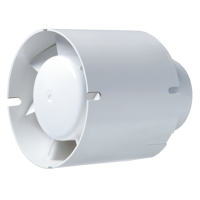
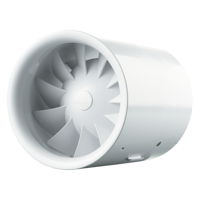
An inline extractor fan is a practical solution when wall or ceiling mounting isn’t possible in your case. The unit is installed inside the duct, so the advantages of inline models are quiet operation, the ability to conceal the equipment and keep the interior looking neat.
This category presents Blauberg residential axial fans with a plastic housing and single-phase AC motors. The units are designed for in-duct installation. Selected modifications are fitted with a backdraft damper and a timer. The main series are:
An inline extractor fan is an axial fan installed inside the duct run rather than directly in a ventilation opening in the wall or ceiling. Blauberg units are designed for connection to standard domestic ducts with a diameter of 100, 125 or 150 mm.
An inline bathroom extractor fan is used in separate and combined washrooms with no external wall, where the ventilation opening is located in the ceiling. The fan is installed in the duct that connects the extract grille to the ventilation shaft, or directly to an air outlet on the façade or roof. A single inline fan can remove air through one or two grilles connected to a shared duct run.
An inline duct booster fan is equipment for boosting the airflow in a ventilation system — for example, if the capacity of the installed fan isn’t sufficient. The need for boosting can arise because the duct run has been extended or made more complex, or because a second room has been connected to a shared ventilation shaft.
An inline duct supply fan delivers fresh air from outside into the room through the duct system. It is used to provide forced supply ventilation when the natural inflow of air isn’t enough.
Take a look at Blauberg Tubo — a versatile inline solution for both supply and extract ventilation. The full list of available models is presented on the series page.
A quiet inline duct fan is especially suitable for bathrooms located next to bedrooms or living areas, where the noise level matters.
Take a look at Blauberg Ducto — a low-noise series of axial inline duct exhaust fans with a superior airflow-to-noise ratio.
A silent inline duct fan is mounted in the duct away from the ventilation grille, which further reduces the sound pressure level in the room. Positioning the unit above a suspended ceiling, in a loft or in a service space will reduce noise not only in adjacent rooms, but in the bathroom itself. The exact noise level in dB(A) is stated in the technical specifications of each model.
An inline extractor fan is a ventilation device installed inside the duct that connects the ventilation grille to the ventilation shaft or to an outlet outside. It removes stale air from the room, while selected versatile inline models can also be used for supply, depending on the installation direction. The unit is usually positioned in a duct run passing through a loft, a service space or above a suspended ceiling, which further reduces the noise it makes in operation.
An inline bathroom exhaust fan is used in washrooms with no external wall. The fan is installed in the duct that connects the extract grille to the ventilation shaft. A single inline fan can remove air through one or several grilles connected to a shared duct run.
An inline duct booster fan boosts the airflow in the duct. The unit is needed if the system suffers from insufficient draught, or if the capacity of the main fan isn’t enough to move air effectively. Such models are often used in long or complex duct runs, in particular in systems serving several rooms.
Yes. Blauberg Ducto is a quiet inline duct fan with a superior airflow-to-noise ratio. Installing the fan inside the duct further reduces the noise heard in the bathroom itself.
Blauberg inline extractor fans are designed for connection to ducts with a diameter of 100, 125 or 150 mm. The size is chosen according to the diameter of the existing duct run, also taking into account the required fan capacity.
Yes. The Blauberg Tubo series is intended for supply and extract ventilation. The direction of the airflow will depend on how the fan is installed in the duct run.